
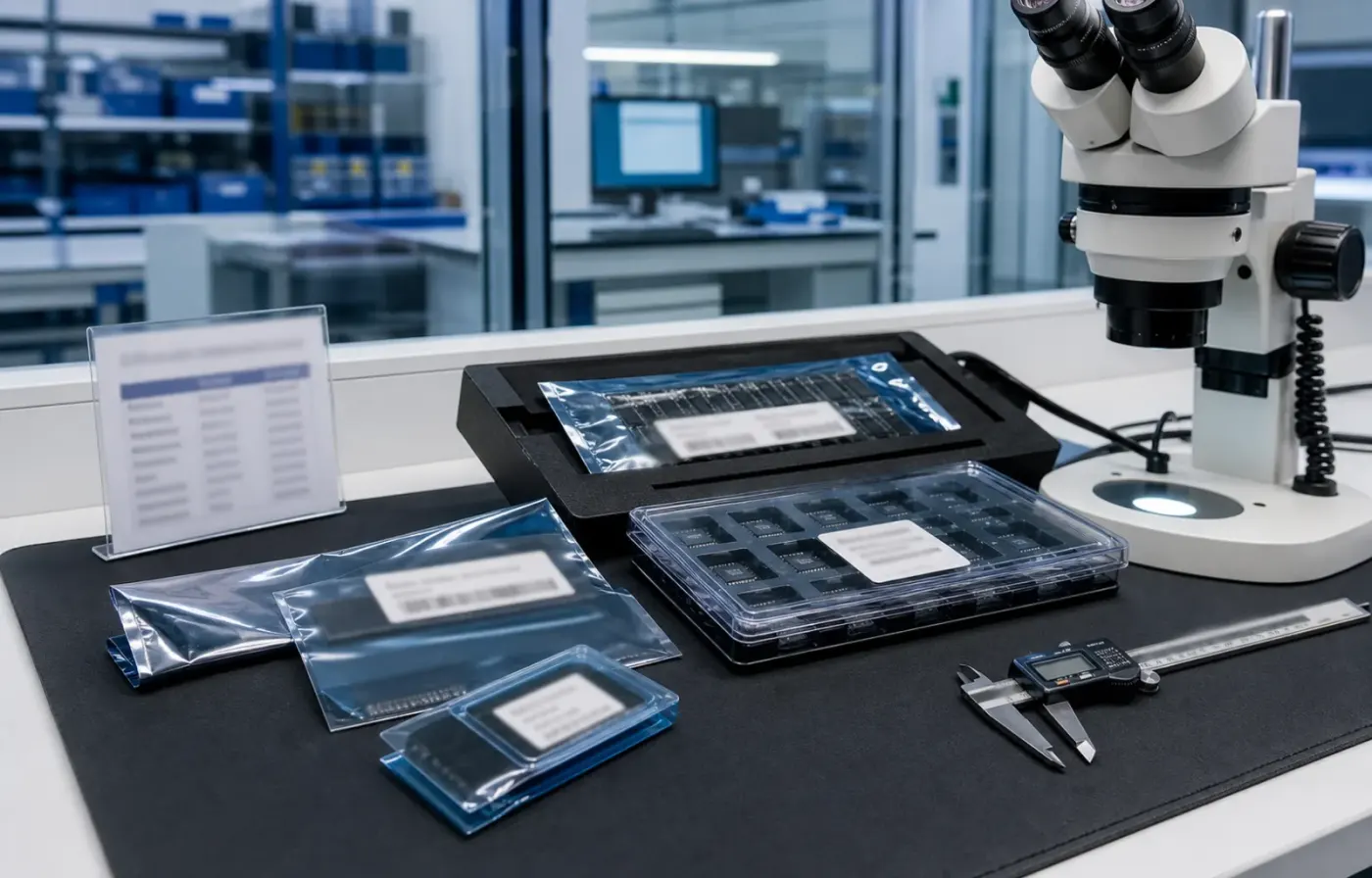
Model & package intelligence
Model text, package form, tray or reel details, and visual evidence are reviewed together before RFQ feedback.
 WMSIC
Electronic Components
Available for RFQ
Technical data
For datasheets, package documents, compatible-part guidance, or other technical resources, contact WMSIC customer service. Availability is confirmed case by case.
adopts ESP32-C6FH4 chip and is equipped with RISC-V 32-bit single-core processor. Support clock frequency up to 160 MHz;Integrated with 320KB ROM, 512KB HP, 16KB LP and 4MB Flash memory;Integrated with 2.4GHz Wi-Fi 6 and low-power Bluetooth dual-mode wireless communication, Excellent radio frequency performance;USB Type-C interface is adopted, which leads to rich peripheral interfaces without tangled plug-in and plug-in;Support a variety of low-power working states, adjust the balance between communication distance, data rate and power consumption, and meet the power consumption requirements of various application scenarios.
ESP32-C6 is a micro-controller development board with small size and various digital interfaces
ESP32-C6FH4 chip is adopted, which is equipped with RISC-V 32-bit single-core processor
supports clock frequency up to 160 MHz, and has built-in 320KB ROM, 512KB HP and 16KB LP
It is compatible to expand a variety of peripheral devices, making it more convenient to use.
In terms of software, you can choose ESP-IDF development environment or For Arduino IED for development

ESP32 S3 SuperMini is an IoT mini development board based on the Espressif ESP32-S3 WiFi/ Bluetooth dual-mode chip. The ESP32-S3 is a 32-bit RISC-V CPU that contains the FPU (floating point unit), which can perform 32-bit single-precision operations and has powerful computing power. It has excellent RF performance and supports IEEE 802.11b /g/n WiFi and Bluetooth 5 (LE) protocols. The board comes with an external antenna to enhance signal strength for wireless applications. It also has a small and delicate form factor combined with a single-sided surface mount design. It is equipped with a wealth of interfaces, with 11 digital I/ OS that can be used as PWM pins and 4 analog I/ OS that can be used as ADC pins. It supports four serial interfaces: UART, I2C and SPI. The board also has a small reset button and a boot loader mode button.
Based on the above features, ESP32S3SuperMini is positioned as a high-performance, low-power and cost-effective iot mini development board suitable for low-power iot applications and wireless wearable applications.
ESP32 S3-SuperMini
#Hardware description
#
Product parameter
Powerful CPU: ESP32-S3, 32-bit RISC-V single-core processor, running at up to 160 MHz
WiFi: 802.11b/g/n protocol, 2.4GhHz, support Station mode, SoftAP mode, SoftAP+Station mode, hybrid mode
Bluetooth: Bluetooth 5.0
Ultra-low power consumption: deep sleep power consumption of about 43μA
Rich board resources: 400KB SRAM, 384KB ROM built-in 4Mflash.
Chip model: ESP32S3FH4R2
Ultra-small size: As small as the thumb (22.52x18mm) classic shape, suitable for wearables and small projects
Reliable security features: Encryption hardware accelerators that support AES-128/256, hashing, RSA, HMAC, digital signatures, and secure startup
Rich interface: 1xI2C, 1xSPI, 2xUART, 11xGPIO(PWM), 4xADC
Onboard RGB, blue LED: common GPIO 48 pin

Request for quote
Use the form for single models, category sourcing, and multi-line BOM requirements.

Product sourcing intelligence
WMSIC turns product data, package visuals, BOM context, and sourcing signals into practical RFQ notes for buyers.
Model text, package form, tray or reel details, and visual evidence are reviewed together before RFQ feedback.
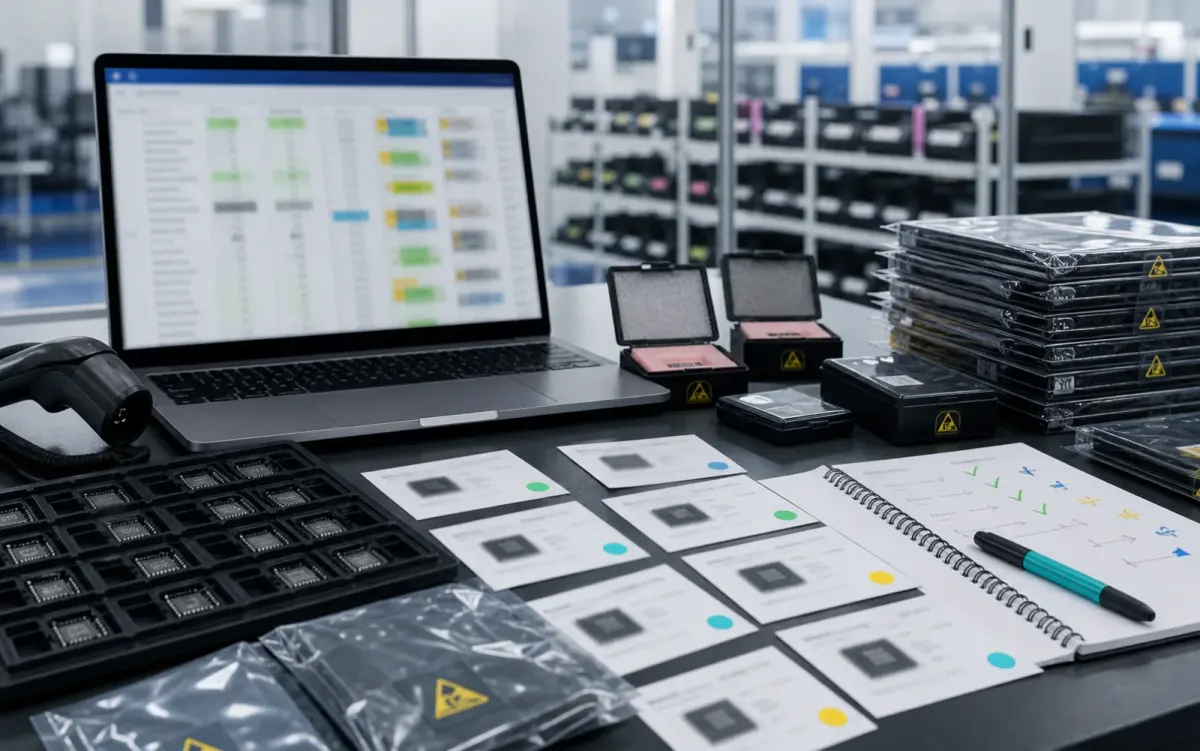
BOM lines are compared by package, parameters, quantity, and workable alternatives for cleaner sourcing decisions.
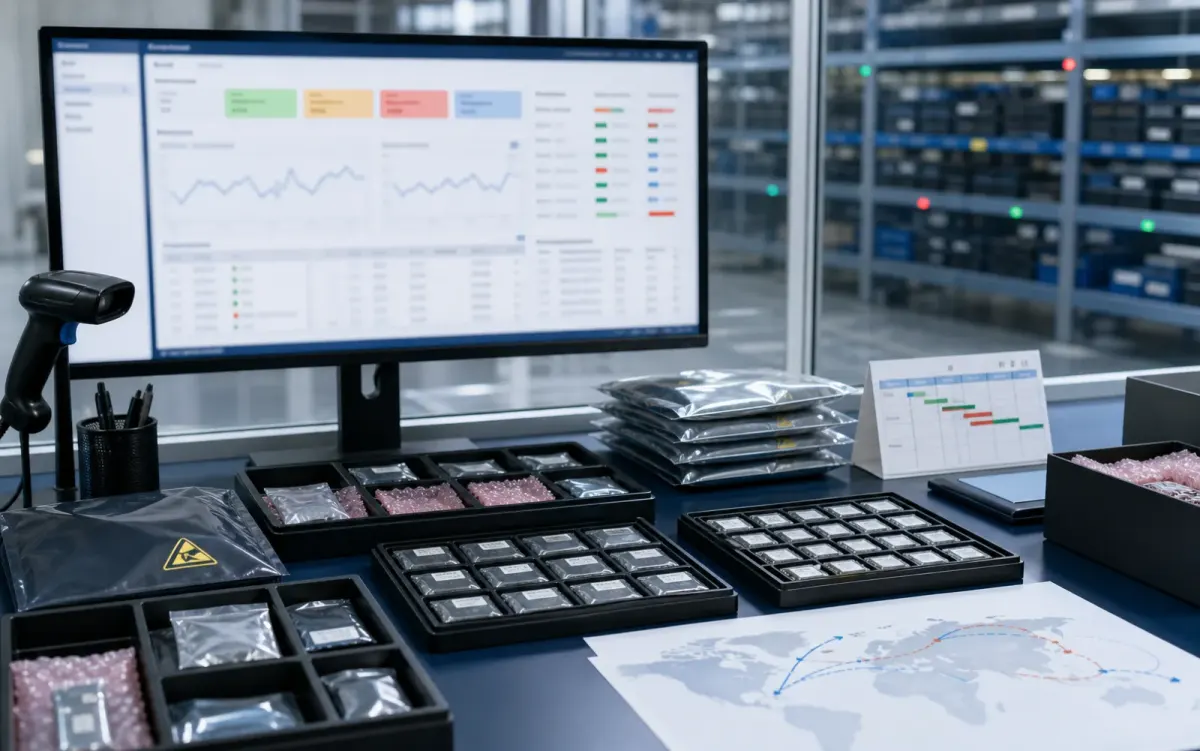
Stock routes, quotation confidence, lead-time notes, and shipment feasibility are checked before sales follow-up.
Buyer sourcing scenarios
Typical RFQ scenarios based on the WMSIC form fields, catalog data, manual review steps, and shipment preparation workflow.
The buyer shares the full part number, package requirement, quantity, destination, and available product photos so the quotation can record the exact version under review.
A multi-line BOM is organized into direct sourcing lines, lines that need package clarification, and lines where alternative-part review is permitted.
The original manufacturer part number, datasheet revision, application, critical limits, and acceptable changes are collected before possible candidates are discussed.
Sample quantity, minimum packing, package format, target date, and courier destination are kept together in one RFQ conversation.
Package photos, model markings, board context, and the quantity needed for repair help focus the sourcing review on the relevant version.
When a suffix or package note is incomplete, the response records the open difference and requests buyer confirmation before procurement proceeds.
Packing format, carton notes, invoice details, courier option, destination, and tracking handoff are coordinated around the confirmed order.
The request connects the previously used model, current demand, package evidence, target timing, and replenishment sourcing route.
Related products


